My Blog
vintage & retro style
  • Home
  • About Me
  • Cart
  • Checkout
  • Shop
  • Contact
  • 0
Author

admin

admin

Uncategorized

How to Win More Clients

by admin April 3, 2025
written by admin


“I’m a freelance newbie, and I can’t land clients despite the many proposals I send to prospects,” Andrew grieves.

Lucy sighs:

“I’m a savvy freelance writer with advanced skills in the niche, but prospects seem to miss this point in the proposals I send to them. Most never get back.”

email alerts

Get Weekly Freelance Gigs via Email

Enter your freelancing address and we’ll send you a FREE curated list of freelance jobs in your top category every week.

I nod with sympathy:

Whatever experience and background, most freelancers look for a failproof method to send proposals that win clients. Guess what? There isn’t any. Whether you write custom college essays, craft marketing texts, or freelance on books as a ghostwriter, you can’t stick to a single template for sending your bids.

But you can organize it properly to boost your chances of landing a gig. In this article, I’ll reveal the anatomy of a winning freelance writing proposal that helps stand out in the fierce competition of the freelance workforce.

After 10 years in creative content creation, I do have some insights to share on the subject.

Ready to stand out as a freelancer? Here we go!

What (Exactly!) Is a Proposal, and Why Do You Need a Killer One?

A proposal is a detailed pitch or document a freelancer sends to prospects (companies or individual clients). It’s an instrument to introduce yourself, mention your skills, and outline how they will address the client’s needs.

Confession:

Before 2020, I didn’t give a damn about proposals. I wrote texts, gathered them in a portfolio, and shared the link with potential clients when pitching them. Let’s face it, it was enough back then: I landed gigs, grew and polished my skills, and built my reputation as a professional content writer.

Boom!

The post-COVID era has changed the rules of this game. Freelancing broke new ground and went from a side hustle to a career path for many. Result? The market gets a massive pool of talent — freelancer population has reached over 1.5 billion people globally in 2024 — and turns into a bloodthirsty hunt for clients.

ChatGPT and its fellow AI writers stoke the fire, threatening to steal a freelancer’s job, thus encouraging specialists to look for alternative ways to stand out.

An effective freelance proposal is your trump card to win this battle. Your human creativity, personalization skills, and added value are your secret weapons to make your proposal original and outstanding.

How to Write a Proposal: The Structure

I’ve watched tons of video tutorials and read myriads of articles on freelance proposal writing. Most of them mention the list of, as they say, “crucial” (man, I hate this word now, thanks to AI and AI detectors) elements to include in your proposal to make it shine.

Here’s the list:

  1. Introduction: Provide a concise overview of yourself and your work. Here, you can include your landing page (if you have one) or a brief about your services.
  2. Understanding the project you are applying to: Demonstrate your understanding of their requirements and that your vision aligns with theirs.
  3. Scope of work: Give them details of what you’ll deliver, with all the milestones and limitations. Provide a detailed timeline of when the client can expect the result.
  4. Approach: Explain the how behind your work (what methodologies and tools you’ll use to complete the project/task).
  5. Credentials: Highlight that your experience and expertise are relevant to what your prospect is looking for. Showcase your portfolio, testimonials, case studies, etc.
  6. Pricing: State your fees in the proposal and be transparent about payment terms.
  7. Contacts: Make it easy for the client to reach you.

I don’t see any problem with the elements themselves. All of them are essential to provide to potential clients so that they know if you fit their expectations and needs. The problem is different:

Advertisement: Advertisement:

SponsoredBecome a sponsor

If you take this structure as a template and stick to it when writing your proposal, the result will disappoint your prospects. Your pitch will look mechanical, non-genuine, and emotionless.

What to do?

Take all those elements, mix them up, flavor them with your authenticity, add personalization, and put a pinch of storytelling to evoke the desired emotions in readers. Humans, not bots, will read your proposals; unlike bots, humans are emotional; inspire the right emotions in a prospect — and your chances of winning their favor will skyrocket.

Below, I’ll share some tips on this.

How to Write a Proposal: Tips

  1. Come up with a catchy subject line.
  2. Give them value from the start.
  3. Mind your tone of voice.
  4. Make your proposal visually appealing.
  5. Offer a freebie.

Come up with a catchy subject line

You already know the elements of a proposal. It’s time to combine them into compelling text and send it to prospects. Given the competition, the hardest part is to make them notice your email in the inbox and open it.

Take some time to craft an engaging yet relevant subject line for your proposal.

My tricks:

Advertisement:Advertisement:

SponsoredBecome a sponsor
  • I start it with an emoji, if applicable. (It depends on the client, the business specifics, and the tone of voice they use in communication with the audience.) A tiny emoji serves as an eye-catcher while scanning incoming emails.
  • I structure a subject line as a question, thus evoking curiosity to open my email and learn more.
  • I mention something of value for the client. (More on that below.) Who doesn’t want to check what others have for their business?

For instance, when I pitched publishing houses with my book, my subject line was, “🎁 What a book a new book manuscript?” It’s catchy, intriguing, and relevant to what they were looking for: With the 70% open rate, it did the job!

Give them value from the start

Your proposal is not about you but what you can give to the client.

What is your USP (unique selling proposition)? What sets you apart from other freelancers? Is it your approach to work, the topics you cover, your unique methodology, etc.?

Focus on emphasizing the value and solutions your expertise can provide to their business. Show your genuine interest in the project: Your proposal should communicate your understanding of their needs and your willingness to fulfill them.

When showcasing your value, back up your claims with relevant skills and experience. Boasting is super (if done right), but they need proof of your ability to do what you promise.

Advertisement:Advertisement:

SponsoredBecome a sponsor

My case:

Guest blogging helps me build my portfolio and demonstrate my expertise, so I sometimes pitch websites to offer a comprehensive guest post that will complement their content strategy. For them to see I can do that, I add a few samples of my published works to that proposal.

(Sure thing, those samples are on the topics relevant to their niche.)

Mind your tone of voice

Keep it conversational yet professional; sound confident yet warm. Balance is key: Write like you’re in a friendly chat but showcase your expertise.

My tip: Smile while writing. It helps maintain a positive tone throughout the message and communicates those positive vibes to the reader.

Don’t copy-paste one proposal template for all prospects you intend to reach—personalize each.

  • Address the individual needs of every client.
  • Add personal touches throughout your proposal: Call the client by name, reference specific points from their communication, mention something about their company, etc.
  • End with a call to action to express your eagerness to hear feedback.

Make your proposal visually appealing

No one wants or has time to read long walls of text, so do your best to make your proposal reader-friendly at first glance.

When using a layout, choose neat and organized ones with clear structure and aesthetically pleasing design. When writing an email, stick to the rules of web writing:

  • Short sentences and paragraphs
  • White space between paragraphs for more comfortable scan and reading
  • Active verbs, descriptive adjectives, and up-to-point information
  • In-text links to your portfolio or other references (Some prefer not to open attached files from unknowns for security.)
  • 5-7 paragraphs maximum: salutation, introduction, offer, credentials, and call to action

Offer a freebie

Think of some extras you might offer with your proposal. For example, a discount on your services or in-kind offers that can make you a more attractive candidate.

As a content writer, I often include something of these in my proposals: designing custom images for the article I’ll write, uploading and formatting it in WordPress, repurposing it for other channels (social media posts, SlideShare, optimizing it for search engines, and so on.

Now, It’s Time to Craft Yours!

A freelance proposal is your powerful weapon for specialists willing to stand out from the competition, build their brand, and win more clients. Now that you know how to write it and have tips on crafting it, it’s time to practice!

Keep the conversation going…

Over 10,000 of us are having daily conversations over in our free Facebook group and we’d love to see you there. Join us!



Source link

April 3, 2025 0 comment
0 FacebookTwitterPinterestEmail
Uncategorized

10 Tips for an Effective Web Designer Portfolio

by admin April 3, 2025
written by admin


Every web designer is well aware of the competitive web market. So, having a strong portfolio that showcases web design skills is non-negotiable when securing new clients. After all, without a strong portfolio, how can you prove your worth as a professional?

This article covers ten key tips every web designer should take to build a strong portfolio that will make them stand out from the crowd and help attract potential clients.

Select an Intuitive Layout

As your web designer portfolio is a collection of all the projects you’ve worked on, you must choose a clear and intuitive layout to showcase them. In particular, your portfolio layout must be consistent across different devices, so when someone opens it from a mobile phone or desktop device, there isn’t a huge difference.

email alertsemail alerts

Get Weekly Freelance Gigs via Email

Enter your freelancing address and we’ll send you a FREE curated list of freelance jobs in your top category every week.

This reduces the navigation hassle and creates a sense of professionalism about you and your work. Therefore, you might select a one-page layout. This way, your visitors can smoothly scroll through all your projects. But make sure not to clutter the page.

Showcase Diverse and Relevant Projects Examples

Research shows that customers spend between 10 and 15 seconds looking at portfolios. That’s not a lot of time. Therefore, you shouldn’t overwhelm your customers with all your work. Instead, make sure you show only your best work through diverse yet relevant projects.

Consider what your potential target client looks for and what their needs and preferences are. Afterward, select the most relevant projects for them and present them properly.

You should display your past projects as case studies that look like presentations rather than an unstructured mix of different projects. This will help you guide the client through the different projects and keep them engaged.

Remember that your portfolio shouldn’t consist only of your past work, but also future directions.

Optimize Your Portfolio

If you’re showcasing your portfolio through a website, note that it should load fast, be responsive, and be easy to navigate. In other words, you must optimize it for performance, usability, and SEO. On top of this, make sure that it’s accessible, compatible, and secure. These technical aspects directly impact visitor experience – slow loading drives away visitors, while poor navigation increases bounce rates.

Some of the best optimization practices include using relevant keywords, meta tags, and alt text that describe your work and niche. Also, link the portfolio to your blog, resume, and social media profiles.

Turn Your Personality into Design

Your web design portfolio needs to spark emotion among your visitors, which will help you create personal relationships with them. To achieve this, use animated effects, add remarkable illustrations, or integrate some abstract shapes to make your portfolio unique. This will not only keep the potential more engaged but also depict your web design skills.

Introduce Yourself in a Creative Way

As people hire people and not portfolios, you need to introduce yourself and make your personality stand out. Make sure to provide valuable information about you and your experience. Additionally, don’t forget to mention what areas in life interest you, what project you’re most proud of, and why. This will establish the first and most important connection with your potential clients. 

The best practices for introducing yourself in a creative way include storytelling or combining your text message with some visual elements you’ve built.

Share Customer Testimonials

Building trust is important in attracting new clients. In fact, it can be the determining factor for many potential clients in choosing you over your competitors. This is because customer testimonials can be authentic social proof telling your services are legit and deliver real results.

When potential clients look for people to work with and see how others are satisfied with your services, they are more likely to believe in your skills and assume you can help them solve their problems. Additionally, having customer testimonials laid out for potential clients to see can help them think hiring you is less risky than working with a different web designer who other people haven’t worked with.

Start a Blog

Blogging is often a great way to show your expertise in the web design industry. You can share some tips or how-to guides, invite other professionals to share their opinions, or even post guest articles on other websites. As a result, both your customers and search engines will perceive you as an authoritative person who specializes in web design, boosting your web rankings and traffic.

Implement a Secure Web Host

When building a digital portfolio, you shouldn’t forget about your visitors’ sensitive information. Even if you’re not collecting sensitive user data, a secure website builds trust and professionalism. Make sure your hosting provider offers essentials like:

  • SSL certificate (HTTPS)
  • Regular automatic backups
  • Firewall protection
  • DDoS protection
  • Two-factor authentication for your admin panel

These features will help you ensure that your digital portfolio is up and running, safe to navigate, and doesn’t put your potential clients at risk.

Advertisement: Advertisement:

SponsoredBecome a sponsor

Use Encrypted Communication Methods

Encrypted communication methods block interception by a third party and protect the information you transmit. Therefore, you should choose communication methods, such as encrypted calls, SMS, messages, and file sharing, whenever talking to your potential clients.

Implement Password Managers

Using the same password to access your digital portfolio and other accounts can increase your vulnerability to online attacks. Therefore, you need to set a strong and unique password for each account. This is something that browser extensions like Firefox password managers handle.

They store all your passwords in one place and fill in your login details automatically, reducing the need to type them any time you log into your portfolio. 

Craft an Impressive Web Designer Portfolio

With so many businesses going online, web designers are kept busy. But with high competition, becoming the one that clients choose over and over again isn’t as easy.

By following these ten tips, you can ensure an impressive web designer portfolio that will help you secure new clients. Remember, it’s not only about the appearance. Combining cybersecurity practices is also a must.

Advertisement:Advertisement:

SponsoredBecome a sponsor

Keep the conversation going…

Over 10,000 of us are having daily conversations over in our free Facebook group and we’d love to see you there. Join us!


Source link

April 3, 2025 0 comment
0 FacebookTwitterPinterestEmail
Uncategorized

How to Turn Your Freelance Website into a Lead-Generating Machine

by admin April 3, 2025
written by admin


When I started freelancing, I picked up all my gigs via online marketplaces and lived from paycheck to paycheck. Feeling that there had to be more to being my own boss than that, I realized I needed to get my own website. However, due to my inexperience, it wasn’t an instant lead magnet.

My debut website was little more than an online resume. I had a portfolio, a contact page, and a short “About Me” section, but it wasn’t attracting clients like the magic formula it was supposed to be.

It wasn’t until I made a few strategic changes that I started seeing results.

email alerts

Get Weekly Freelance Gigs via Email

Enter your freelancing address and we’ll send you a FREE curated list of freelance jobs in your top category every week.

Here are some pointers I’ve learned the hard way, which will help you turn your freelance website into a lead-generating machine.

Make Your Offer Crystal Clear

To attract as many warm leads as possible, your website must leave visitors in no doubt about your services.

Define Your Niche

Your website needs to tell visitors exactly what you do and who you do it for—fast! If someone has to scroll or dig through umpteen paragraphs to figure out your specialty, they’ll leave.

When I shifted my messaging from “I’m a graphic designer” to “I help small businesses build standout brands with custom design,” inquiries tripled. Clarity sells.

Finding your niche means narrowing down your target audience. Instead of trying to serve everyone, identify your ideal client based on industry, business size, and specific needs. Do some homework on your niche competitors and find gaps you can fill. The more tailored your message, the better your chances of attracting high-quality leads.

Create a Compelling Value Proposition

Your home page should have a clear, concise statement telling potential clients why they should work with you. What problem do you solve, and what makes you different from the rest of the crowd?

Instead of a generic “Welcome to my site,” try something like:

  • “Helping coaches and consultants attract clients with strategic web design.”
  • Custom designs that give your brand new life.”
  • Conversion-focused copywriting that turns visitors into buyers.”

Display your value proposition in a prominent spot, ideally in a hero section with a bold headline and subheadline. A short, compelling video (under 60 seconds) explaining your services can also add punch and personality to your homepage.

In addition, always be transparent about pricing. If possible, provide a pricing guide or starting rates. Transparency helps prequalify leads and filters out visitors who may not be the right fit. It also builds trust with customers who have suspicious natures, like me, who are always on the lookout for scams.

If I struggle to find pricing, my scam-alert antennae prick up, and I leave the site.

https://www.youtube.com/watch?v=OYwost6v3-Y

<iframe width=”560″ height=”315″ src=”https://www.youtube.com/embed/OYwost6v3-Y?si=I7BYdu47p1mcNnnY” title=”YouTube video player” frameborder=”0″ allow=”accelerometer; autoplay; clipboard-write; encrypted-media; gyroscope; picture-in-picture; web-share” referrerpolicy=”strict-origin-when-cross-origin” allowfullscreen></iframe>

Optimize for Conversions

If you want your freelance website to become a lead-generation machine, you must optimize it for conversions.

Display a Clear Call-to-Action (CTA)

Your website must guide visitors toward the next step, whether that’s booking a call, completing a contact form, or downloading a free resource. Every page should have a CTA.

What worked for me? I added a button at the top of every page with a direct CTA: “Book a Free 15-Minute Consultation.” Leads increased immediately. Everyone loves a freebie, especially if it solves the client’s problem.

Advertisement:Advertisement:

SponsoredBecome a sponsor

For best results, your CTA should be:

  • Actionable: Use strong, clear language (e.g., “Get Started Today” instead of “Learn More.”
  • Visible: Place it above the fold so visitors don’t have to scroll.
  • Compelling: Offer something valuable, like a free strategy session or downloadable resource.

There are two kinds of CTAs: primary and secondary.

Primary CTAs are the prominent ones found on all your pages.

Secondary CTAs include other options more specific to certain pages or the user’s interests.

For example, a blog post could include a secondary CTA like “Download Our Free SEO Toolkit” or provide a link to a related article.

Streamline Your Contact Process

If customers have to jump through hoops to reach you, they won’t! Keep your contact form short and easy to complete. Name, email, project details—that’s it.

Advertisement: Advertisement:

SponsoredBecome a sponsor

I tested removing my contact form and replacing it with a Calendly link, and there was an immediate upturn in conversions. The easier you make it, the more leads you’ll get.

You should also consider live chats or AI chatbots to engage visitors instantly. People want instant answers, and these tools allow you to answer questions in real time, upping the chances of conversion.

Another effective strategy is to include an FAQ section that addresses common concerns. This will increase the number of qualified leads who contact you.

Build Trust With Social Proof

Visitors to your site want to know that your business is right for them and that you offer top-tier products or services.

Showcase Testimonials

Nothing sells your services like real success stories. Display client testimonials in prominent spots on your site,  preferably with photos or logos for extra credibility. When I started placing testimonials directly under my CTA, potential clients had more confidence in reaching out. It’s a simple tweak with potentially massive results.

For even greater impact, use video testimonials. Studies show that video content increases trust and engagement, making visitors far more likely to reach out.

Highlight Case Studies

A great portfolio isn’t just about pretty pictures; it should also tell a story. Show potential clients the transformation you’ve created for others.

Advertisement:Advertisement:

SponsoredBecome a sponsor

Instead of only displaying finished projects, I started including before-and-after comparisons and writing about the process. This helped potential clients see the tangible results they could expect.

When you create a case study, write about a relatable customer. Outline the customer’s journey with you and how you helped solve their problem. Always have actual statistics to back up your case study.

Another element that helps turn your freelance website into a lead-generating machine is metrics. Did you increase a client’s revenue? Improve conversion rates? Reduce bounce rates? Numbers make your case studies more persuasive.

Leverage SEO for Organic Traffic

Your business may have nothing to do with the inner workings of Google and the internet, but you have to make it “see you” and shine a spotlight on your website for it to generate leads. Enter your new best friend: Search Engine Optimization (SEO).

Optimize for Keywords

Your website won’t generate leads if no one can find it. Ideally, you want to rank on the first page of Google when a client searches for your service or products. Do some basic research and optimize your site for terms your clients use in their searches.

I tweaked my homepage to include phrases like “freelance web designer for startups” and “branding for small businesses.” Within a few months, I was ranking higher on Google and getting inquiries from people who had never heard of me before.

Use SEO tools like Ahrefs, Google Keyword Planner, or Ubersuggest to identify relevant keywords. Then, sprinkle them naturally into:

  • Page titles
  • Meta Descriptions
  • Headings (H1, H2, H3)
  • Alt text
  • Blog content

Start a Blog

Blogging is a powerful way to attract potential clients. Always write about topics your audience cares about and optimize the posts for search engines.

Aim for long-form (1000 – 1500 words), in-depth content that provides real value. Include internal links to other posts to keep visitors on your site for longer and external links to authoritative sources to boost your credibility. Also, remember to refresh old blog posts with updated information and keywords to maintain rankings over time.

With AI writing much of the content on many websites, it’s worth writing the posts yourself or hiring a freelancer to do it for you, or you may end up sounding like a robot. Posts need personality and facts to keep your readers interested and convert them into customers.

Use Lead Magnets to Capture Emails

A lead magnet is a tool that convinces visitors to your website to part with their contact information. The idea is that your lead magnet gives something in return, and as research shows that 83% of consumers are willing to share data for a personalized experience, you need to capitalize on this.

You can do this in different ways, including:

Offer a Freebie

Not every person who visits your site is ready to hire you.

In fact, a vast number of consumers visit websites for reasons other than buying something, so you need them to keep you top of mind for when they are ready.

Capture their email with a valuable free resource, such as a guide, checklist, or template, so that you can nurture the relationship over time. Then, you can add them to your email list.

Some lead magnets that work brilliantly include:

  • Free eBooks or whitepapers
  • Exclusive industry reports
  • Email templates or toolkits
  • Free trial or discount offers

Set Up an Email Sequence

Once you have email addresses, don’t let them go cold. Create an automated email sequence that provides valuable information to subscribers and gently guides them toward working with you.

For extra engagement, you can use interactive elements such as quizzes or personalized recommendations.

My simple five-email sequence introduces me, shares helpful tips, and then offers a special deal on my services. This alone has brought in more clients than I expected.

Use tools like MailChimp, ConvertKit, or ActiveCampaign to automate and personalize your email sequences.

Aesthetics and Speed

It’s true—a pretty website is not enough to act as a lead-generating machine. However, research proves that 38% of consumers leave sites if they have an unattractive layout. Customers will also leave your website if it doesn’t load in under three seconds on their mobile devices.

So, the moral of the story is that you need a visually appealing, fast-loading website to generate leads.

Get Social

Yes, you want your website to be a lead-generation machine, but you need a little help from your friends. Create some social media profiles on networks where they will be visible to your target audience and include the links to these profiles on your website.

You can boost your business by regularly updating your social media profiles with informative and entertaining posts. The more your target audience sees of your business, the more they will trust you.

The Bottom Line

As a solopreneur, creating a website is an essential way to attract new business. However, instead of just introducing yourself and adding a portfolio, you need to be crystal clear on what you do, why you’re the best in the business, and how they can contact you to solve their problems.

Tweaking your design with our simple tips will help you turn your freelance website into a lead-generating machine.

Keep the conversation going…

Over 10,000 of us are having daily conversations over in our free Facebook group and we’d love to see you there. Join us!



Source link

April 3, 2025 0 comment
0 FacebookTwitterPinterestEmail
Uncategorized

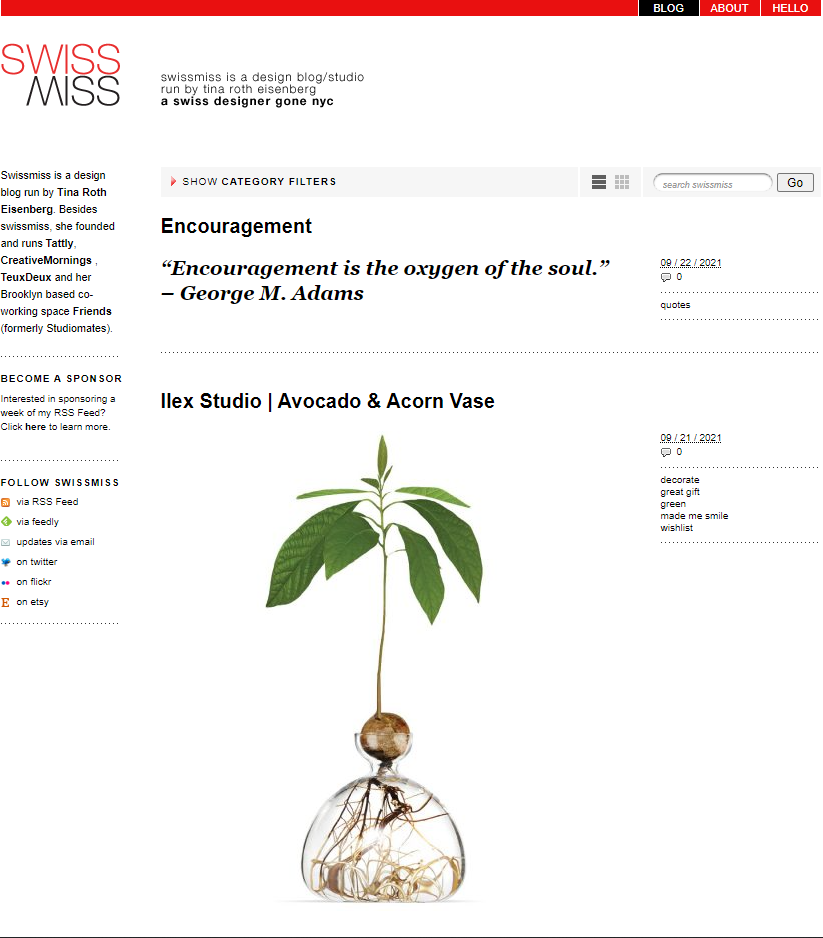
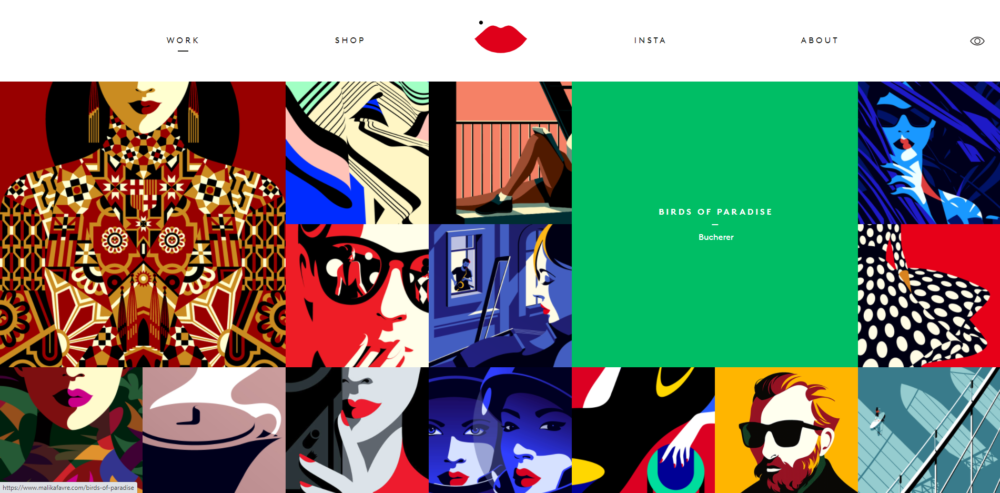
5 of the Best Personal Websites to Inspire Your Own

by admin April 3, 2025
written by admin


94% of people form their first impressions of a website based on its design.

If you’ve ever doubted the importance of website design, I bet you don’t now.

Whether you’re a freelancer, entrepreneur, or creative, your website isn’t just a digital placeholder. It’s a powerful tool for building trust, showcasing your work, and attracting new opportunities.

email alertsemail alerts

Get Weekly Freelance Gigs via Email

Enter your freelancing address and we’ll send you a FREE curated list of freelance jobs in your top category every week.

In this post, we’ll look at five personal website examples to help inspire your own.

Elements Your Personal Website Should Have

If you’re thinking about creating (or revamping) your personal website, you must get a few key elements right. Your site isn’t just a digital business card. It’s a space where people can connect with you, learn about your work, and (hopefully) want to work with you.

Here’s what every great personal website should have:

  • A clear introduction. Within seconds of landing on your site, visitors should know who you are and what you do. A simple tagline or a short bio on your homepage works wonders.
  • A well-designed “About” page. This is your chance to tell your story! People love to connect with real humans, so make your “About” page more than just a resume—share your journey, what you’re passionate about, and maybe even a fun fact or two.
  • A portfolio or work showcase. Whether you’re a designer, writer, developer, or consultant, show off your best work. Case studies, samples, or even testimonials add credibility and help people see your expertise in action.
  • A way to contact you. Make it ridiculously easy for people to reach out. A simple contact form, an email address, or even links to your social media work fine—don’t make visitors hunt for this info!
  • A personal touch. The best personal websites feel like you. Whether it’s through color choices, imagery, or even little snippets of personality in your copy, make sure your site represents your unique style.
  • Mobile-friendly and fast. You’ll lose visitors if your site looks great on a laptop but breaks on a phone. A clean, mobile-responsive design and fast load times are non-negotiable.

5 Best Personal Websites to Inspire Yours

1. Tim Ferriss

Tim Ferriss is a bestselling author, entrepreneur, and podcast host. He’s best known for The 4-Hour Workweek and his deep dives into productivity, self-improvement, and unconventional thinking.

His website is a hub for his work, featuring his popular podcast, book recommendations, and insightful blog posts. Tim’s site is an excellent example of a personal website that does it all while staying clean and easy to navigate.

What His Website Does Right:

  • Content front and center. The homepage immediately pulls you into his world, featuring his blog, podcast, and books. No fluff—just valuable content right away.
  • Minimalist, easy-to-navigate design. The site is simple but effective. No distractions, just clear sections for his main offerings.
  • Strong personal branding. Tim’s voice and expertise shine through in every part of the site. Everything aligns with his brand, Whether through his blog posts or curated book lists.
  • Trust signals and social proof. He includes media mentions, bestselling books, and guest appearances on significant platforms, instantly boosting his credibility.
  • Email list call-to-action (CTA). Right at the top, there’s an option to subscribe to his newsletter, making it easy for visitors to stay connected.

Key Takeaways for Your Own Website:

✅ Keep your homepage clean and focused. Showcase your best work upfront.
✅ Make navigation effortless so visitors can find what they need quickly.
✅ Use your site to build trust by featuring testimonials, media mentions, or past work.
✅ Encourage visitors to stay connected through an email list, blog, or social links.

2. Sahara Rose

Sahara Rose is a bestselling author, podcast host, and spiritual mentor known for bringing ancient wisdom into modern life. She focuses on topics like Ayurveda, Dharma (life purpose), and self-empowerment, helping people align with their highest selves.

Her website is a beautiful reflection of her brand—vibrant, soulful, and packed with resources to guide visitors on their journey.

What Her Website Does Right:

  • Bold, eye-catching visuals. The site is full of rich colors, high-quality images, and a modern design that feels warm and inviting. It’s an extension of her personal brand and energy.
  • Clear personal branding. You know what she’s about from the moment you land on her homepage. Her messaging is clear: she helps people find their purpose and step into their highest potential.
  • Strong call-to-actions (CTAs). Whether it’s her free Dharma Archetype Quiz, books, or programs, the site guides visitors toward engaging with her content in a meaningful way.
  • A community-driven feel. Her website isn’t just about her—it’s about the people she serves. Through her courses, podcast, and community offerings, she creates a space where visitors feel seen and supported.
  • Multi-platform integration. She seamlessly connects her podcast, books, and social media, making it easy for visitors to dive deeper into her work wherever they prefer.

Key Takeaways for Your Own Website:

✅ Use colors, fonts, and images that reflect your unique energy and brand.
✅ Make your website feel welcoming and aligned with the message you want to share.
✅ Guide visitors with clear CTAs—joining an email list, taking a quiz, exploring more content, etc.
✅ Build a sense of community so people feel like they belong in your space.

Sahara Rose’s website is an excellent example of how personal branding isn’t just about looking good. It’s about creating an experience that resonates with your audience.

3. Marzzacco Injury Law

At first glance, you might think a law firm website has nothing to do with personal branding. But Marzzacco Injury Law’s website is a great example for entrepreneurs and solopreneurs—whether you’re a lawyer or not. It’s clean, professional, and designed to build trust and convert visitors into clients.

Advertisement:Advertisement:

SponsoredBecome a sponsor

What Their Website Does Right:

  • Crystal clear messaging. The site immediately tells visitors what Marzzacco Injury Law does: They help injured people get justice. There’s no jargon, no fluff. Just clear, client-focused messaging.
  • Strong calls-to-action (CTAs). Every page makes it easy for potential clients to take the next step, whether that’s scheduling a consultation or calling the firm.
  • Credibility and trust signals. Trust is everything in legal services (or any business, really). The site features client testimonials, case results, and recognitions to reassure visitors they’re in good hands.
  • Mobile-friendly and fast. – Since many people look for legal help on their phones, the site is optimized for mobile, making it easy to navigate on any device.
  • Professional yet personable. While it maintains a polished legal look, the website doesn’t feel cold or robotic. It includes actual photos of attorneys, clear contact options, and approachable language.

Another common theme you’ll see on professional, high-quality personal websites? They’re full of resources.

Marzzacco has a very regularly updated blog that answers their target audience’s biggest legal questions for free. It also helps their content marketing strategy by bringing them organic search traffic from Google.

You’ll also see this on websites like Malone Law and the Baumgartner Law Firm.

Key Takeaways for Your Own Website:

✅Clarity is everything. Make sure visitors instantly understand what you offer.
✅Guide visitors toward action. Whether that’s booking a call, signing up, or contacting you.
✅Showcase credibility. Testimonials, success stories, or certifications build trust.
✅Provide high-value content and free resources to educate your potential clients/customers.
✅Make it mobile-friendly. Most people will check your site from their phones.
✅Balance professionalism with personality. People want to connect with you, not just a brand.

Advertisement: Advertisement:

SponsoredBecome a sponsor

4. Travel Like a Bawse

If you’ve ever dreamed of ditching the 9-to-5 and traveling the world, Travel Like a Bawse is the website that will make you want to book a flight—immediately. Created by Shakeemah Smith, a full-time traveler and digital nomad, this site is packed with travel tips, remote work advice, and insider guides to making the most of life on the road.

Travel Like a Bawse is a masterclass in blending personality, value, and business into one engaging website. Whether you’re a travel blogger, content creator, or solopreneur, this site proves that your brand can be fun, informative, and profitable all at once.

What Her Website Does Right:

  • Clear value proposition. From the moment you land on the homepage, you know exactly what this site is about: helping people travel smarter, work remotely, and live on their own terms.
  • Super actionable content. Travel Like a Bawse isn’t just about inspiration. It’s packed with helpful content, such as free masterclasses, online courses, coaching packages, and more.
  • Strong personality. Shakeemah’s personality shines through in every post, making the site feel like you’re getting advice from a well-traveled friend.
  • Monetization done right. The site integrates affiliate links, courses, and travel resources in a natural, not salesy way.

Key Takeaways for Your Own Website:

✅Make your brand stand out. From your site name to your visuals, lean into what makes you unique.
✅Be clear about your value. Tell visitors exactly how you can help them right away.
✅Offer actionable content. Whether it’s tips, guides, or resources, make your site valuable.
✅Showcase your personality. Let people connect with you, not just your content.
✅Monetize strategically. Ads, affiliates, or courses should feel like a natural extension of your brand.

5. Tobias Becs

Tobias Becs is a world-class freestyle footballer, entrepreneur, and content creator. His website is a fantastic example of showcasing a personal brand with style, energy, and purpose. Whether you’re an athlete, creative, or entrepreneur, there’s much to learn from how Tobias presents himself online.

What His Website Does Right:

Advertisement:Advertisement:

SponsoredBecome a sponsor
  • Seamless social media integration. Since a huge part of his brand exists on platforms like YouTube and Instagram, his website smartly directs visitors to his social channels, where they can see his skills in action.
  • Strong business and monetization strategy. His site isn’t just about showcasing his talent—it’s a business hub. It promotes his workshops, consulting services, brand collaborations, and more, showing how personal websites can be more than just a portfolio.
  • Uses video. Video marketing is becoming increasingly more critical, and Tobias makes good use of it throughout his website.

Key Takeaways for Your Own Website:

  • Integrate social media smartly. If your audience is on Instagram, YouTube, or TikTok, make it easy for them to connect with you there.
  • Turn your site into a business tool. Whether through courses, collaborations, or services, make your website work for you.
  • Use videos. I recommend Swarm to make this process easier. Swarm lets you host live Q&A sessions, product demonstrations, and community discussions, making your brand feel more personal and engaging.

Conclusion

The best thing about personal websites is just that—they’re personal. You have so much creative freedom when designing. Learning from the best can inspire your own creativity and set your site up for success.

Keep the conversation going…

Over 10,000 of us are having daily conversations over in our free Facebook group and we’d love to see you there. Join us!



Source link

April 3, 2025 0 comment
0 FacebookTwitterPinterestEmail
Uncategorized

What Every Freelancer Needs to Know About Client Communication

by admin March 27, 2025
written by admin


As a freelancer, I love having the freedom to work from anywhere, doing what I love with no one telling me what to do. 

Except that the last part of that sentence isn’t strictly true. 

My clients are the backbone of my business. Their satisfaction with my service and how I treat them can either help my business grow or bring it to a grinding halt.

email alertsemail alerts

Get Weekly Freelance Gigs via Email

Enter your freelancing address and we’ll send you a FREE curated list of freelance jobs in your top category every week.

The principle that underpins client satisfaction with freelancers is communication. Whether you’re starting your own freelance company or battling to get regular or repeat business, understanding how to communicate with clients from the first pitch to firing them can launch your career to new heights. 

Having been in the gig economy for a few years (and fallen on my face a few times), I’ve compiled a comprehensive guide on what every freelancer needs to know about client communication. 

Effective Communication Strategies

Your communication style can help or hinder a relationship, regardless of who you’re dealing with. Here’s how to win and retain clients as a freelancer with positive communication strategies. 

Active Listening

Contrary to what most people believe, effective communication is more about listening than speaking. As a freelancer, you must understand precisely what your client wants. Assuming you know it all can lead to misunderstandings and conflict—a no-no for retaining clients.

Active listening involves listening without interrupting. When the client has finished speaking, summarize what they’ve said to clarify that you’ve understood them correctly, and do your best to understand their perspective. 

Non-Verbal Cues

If you’re hoping for a successful pitch or to retain existing clients, show an interest in what they’re saying using body language and non-verbal cues if you’re in a face-to-face or virtual meeting. Without staring creepily at them all the time, maintain eye contact while looking away briefly from time to time. 

It’s a little trickier on a video call, but looking at the camera rather than the screen helps convey the same message: “I’m paying attention, and I’m interested in your conversation and perspectives.”

Other tips include:

  • Keeping an open posture by not crossing your arms (and legs in a face-to-face meeting) while facing the client directly.
  • Nodding periodically.
  • Smiling now and then.
  • Avoid frowning, tapping your fingers or feet, checking the time or your mobile phone.
  • Use hand gestures to avoid appearing stiff, robotic, and disinterested.

Verbal Communication

How you say your piece to a client matters as much as what you’re trying to communicate. Respect is the baseline for all communication, even during conflict. It involves listening, not interrupting, and maintaining politeness and etiquette, regardless of the situation.

Adjust your language according to the client’s way of speaking (to a point). If a potential client uses formal language, respond similarly. There’s plenty of time to relax your language when you’ve won them over and get to know them. 

Written Communication

When I use written communication, especially with a cold pitch, I try to be more intentional in how I word the message. With written communication, the client can’t read your mood or responses through body language and non-verbal cues. Make sure your tone is warm and open, and be 100% clear on the information you want to convey.

Communicating with Your Clients at Various Stages

Communication with a client doesn’t end after your pitch. But let’s start at the very beginning.

The Foundation

Before you approach a potential client with your pitch, do a little digging into their background, company, objectives, and the type of work and communication methods they prefer. This preview will help you decide whether their needs align with your services. In your pitch, use the information you gathered for your preview to show interest in their business. 

Clarity is king, especially in written communication. Be clear on your services and how they can meet your client’s needs. There are numerous ways to pitch to clients, but the focus here is to incorporate the effective communication methods discussed earlier to make you come across as skilled, professional, and approachable.

Setting Clear Expectations

When I secured my first freelance project, I was eager to impress and, admittedly, a bit hesitant to lay down strict terms. This led to some scope creep, where the project’s requirements kept expanding without additional compensation. I learned the hard way that setting clear expectations from the get-go is essential.

Advertisement:Advertisement:

SponsoredBecome a sponsor

https://www.youtube.com/shorts/MFe56AKQruQ 

Define the Project Scope

Setting clear boundaries will help protect your valuable time, energy, and reputation (you’re less likely to become impatient and unprofessional). Clearly outlining the project’s parameters prevents misunderstandings and conflict and will help both parties decide if you’re a good fit.

Be specific about timelines, deliverables, and the number of revisions included in the cost. Spend time clarifying that you fully understand their needs and vice versa.

Example: “Based on our discussion, I’ll deliver the first draft by [Date], and we’ll have two rounds of revisions before the final submission if necessary [Date]. The total cost will be [Amount], with 50% payable upfront.”

Managing Availability

Being available 24/7 may earn you a few extra dollars, but you will probably burn out before your career gets off the ground. 

Clearly define your office hours to maintain a healthy work/life balance. I also inform clients of my typical response window on all my social media sites and other points of contact. From early in our relationship, they know I will respond within 24 hours on weekdays.

Advertisement:Advertisement:

SponsoredBecome a sponsor

Use Formal Agreements

You may think everything is set in stone once you’ve had your initial meeting with a client, but things can get very messy without a contract. A formal agreement isn’t just a formality; it safeguards both parties and is a reference point if any disputes arise. 

Choosing the Right Communication Channels

Early in my career, I juggled multiple communication platforms, leading to missed messages and confusion. I soon realized the importance of establishing a primary communication channel.

Discuss Preferences Early

During initial consultations, I now ask clients about their preferred communication methods. Whether it’s email, instant messaging, or project management tools, agreeing on this encourages smoother interactions.

Although I always work within the client’s preference, I am partial to email. Communication is easy to track and plays a similar role to a formal agreement or contract. 

Centralize Communication

Project management tools like Trello or Asana are also game-changers. They keep tasks organized and provide a centralized place for updates and feedback.

Be Proactive: Keep Your Clients in the Loop

Don’t wait for your clients to chase you up for updates on your progress. You may lose a client, even though you’re diligently working on their project.

Even when there’s no significant progress, a brief update reassures clients that their well-earned money is not being wasted on a freelancer who’s ghosting them. This is especially important if they have paid an amount upfront.

Advertisement:Advertisement:

SponsoredBecome a sponsor

It’s also wise to flag potential issues early in the game. If I anticipate delays or challenges, I inform my client immediately, offering solutions or revised timelines. This transparency builds trust and shows me to be an ethical and professional freelancer.

Balancing Professionality with Personality

Initially, I leaned towards being overly formal, but some clients thought I was unapproachable. With experience, I’ve learned to infuse my personality while maintaining professionalism. It’s wise to observe your clients and adjust the amount of personality you infuse accordingly! 

Also, keep culture in mind when dealing with clients from other nations. Some countries have more formal ways of doing business, and you wouldn’t want to offend clients by being too casual, too loud, or using gestures that may be inappropriate for their culture.

Handling Feedback 

Receiving feedback can be nerve-wracking, especially when the client is unhappy. However, reframe negative feelings and see them as a necessary building block to improve your work quality. Handle it with grace and humility, practicing your listening skills to understand your client’s point of view. 

In fact, you should intentionally seek feedback throughout the project. This will help you build a strong relationship with the client, whose loyalty could earn you repeat business and referrals. 

The Power of Follow-Up

Post-project, I ask clients about their experience, asking if there’s anything I can improve on for future collaborations. Checking in with clients regularly can also lead to repeat business. A simple check-in mail or text message can remind clients of your availability.

Handling Difficult Clients

Regardless of how nice you are, there will always be client relationships that don’t run smoothly. There are many types of difficult customers, from those who want to micromanage you to those who ghost you to those who try to pay as little as possible for the maximum amount of work. 

The first secret is to handle difficult clients calmly, respectfully, and professionally. Although you may not want to work with them again, you don’t want them to badmouth you and ruin your reputation.

The second secret is knowing when to walk away. Although initial meetings can help weed out the clients you don’t want, sometimes they find their way through the cracks. Again, respectfully thank them for the opportunity to work with them and find a polite way of bowing out. Sometimes, you have to fire a client for the sake of your business and your sanity.

To Wrap Up

If there’s one thing I’ve learned, it’s that great communication is the secret to a successful freelance business. From simple things like positive body language and non-verbal cues to knowing how to pen an email, our business rests on the ability to sell our services to clients. 

Effective communication will lead to satisfied clients who will bring you repeat business and sing your praises to their peers, friends, and colleagues, who might also need your services in the near future. Treat them right, and they will keep coming back.

Meta Title: The Freelancer’s Guide to Client Communication | Millo

Meta Title: Effective communication is the key to successful relationships. Our detailed guide reveals what every freelancer should know about client communication.

Keep the conversation going…

Over 10,000 of us are having daily conversations over in our free Facebook group and we’d love to see you there. Join us!



Source link

March 27, 2025 0 comment
0 FacebookTwitterPinterestEmail
Uncategorized

Should Schools Rely on AI Content Detectors?

by admin March 26, 2025
written by admin


From the inception of education, people have upheld academic integrity as fundamental to learning. Students now face increased academic dishonesty risks due to the increasing use of artificial intelligence (AI). Modern AI technology enables students to create entire written work, such as essays, assignments, and articles, by performing simple clicks. Students now have access to advanced digital tools that simplify cheating to the point where academic achievement integrity becomes threatened.

Schools implemented AI content detectors as automated systems that scan student work to detect signs of text created by AI programs. Does this solution manage to tackle the problem effectively? The implementation of these tools creates additional ethical concerns regarding confidentiality and equal treatment in the learning environment. This article examines the pros and cons of using an AI detector in academia.

The Growing Threat of AI-Enabled Cheating

Academic dishonesty has always existed in schools. But historically, it required greater effort from the students. They would have to copy passages from sources manually, get answers from peers or pay someone to write original essays. This limited the scale of cheating.

email alertsemail alerts

Get Weekly Freelance Gigs via Email

Enter your freelancing address and we’ll send you a FREE curated list of freelance jobs in your top category every week.

AI generative models have changed the game. Tools like ChatGPT allow students to produce entire assignments within seconds automatically. The level of sophistication is rapidly improving, too. Early AI content was easy to detect, containing factual inaccuracies and incoherent arguments. Modern systems, like GPT-4, generate much more convincing text, even fooling experts on occasion.

This enables students to cheat at an unprecedented scale with minimal effort. They no longer need to carefully plagiar sourcesize or develop elaborate cheating networks. One student with an internet connection can generate unlimited original-looking essays and homework. This seriously threatens the integrity of academic credentials like grades and degrees. If left unchecked, honest students could be placed at a major disadvantage.

Why Traditionalguards Safe Fall Short

Schools have used various techniques over the years to uphold academic integrity. These include plagiarism detectors, proctored exams, honor codes and manual review processes. However, in the age of AI, most of these methods are outdated.

Plagiarism checkers compare student work against existing sources to identify copying. But they are useless at detecting AI-generated content, which is technically “original”. Likewise, proctored exams constrain a student’s ability to cheat in the exam room. Yet, they do nothing to stop students from using AI for take-home assessments.

Even honor codes and academic integrity policies fail to address AI specifically. Their vague principles, threats of punishment and appeals to ethics are no match for the incredible capability and convenience of AI writing tools. Studies show that deterrence only works when the chances of detection and punishment are high. For AI cheating, the detection risk is currently very low.

The limitations of current detection methods are further underscored by the emergence of sophisticated AI applications. For instance, UK universities have encountered applicants using deepfake technology to falsify online interviews, a trend that, while currently limited, is on the rise.

Without updates, traditional safeguards will rapidly become obsolete as AI proliferates. Already, generative writing tools are rapidly becoming mainstream, and their capabilities will only grow more advanced. Schools need robust technical solutions before this trend spirals out of control.

Introducing AI Content Detectors

To close this integrity gap, schools have begun experimenting with a new solution – AI content detectors. These systems analyze student work using advanced machine learning algorithms to determine if parts are AI-generated. They identify subtle indicators like unusual coherence, atypical semantics and inconsistent factual knowledge. If the model suspects AI content, it flags the work for further inspection.

AI detectors provide a scalable and automated way for schools to uphold submission integrity in the age of generative AI. Rather than reviewing random samples of assignments, they can specifically target probable instances of AI cheating for closer inspection by professors, enabling more efficient manual review.

Advertisement:Advertisement:

SponsoredBecome a sponsor

Several companies, including EdIntegrity, Smodin, GPTZero, and Academic Plagiarism Detection, now offer commercial detector services to schools. The technology is still young, but performance is rapidly reaching usable levels. In controlled tests, the best models can identify AI-generated text with over 95% accuracy.

As the technology matures, AI content detectors promise to be an essential pillar of academic integrity – one that safeguards honest students against unrestrained generative cheating. But are there downsides schools should consider, too?

Concerns Around Privacy and Fairness

Despite their promise, AI content detectors spark important debates around ethical usage. Two major issues stand out: privacy violations and fairness biases.

On the privacy front, detectors necessitate collecting and analyzing student work at scale – work that may contain personal information. This triggers concerns over mass surveillance and data exploitation beyond just catching cheaters. Critics argue schools should uphold academic integrity through less intrusive means.

However, properly implemented detectors need not impinge significantly on privacy. Schools can constrain analysis to only the text, discarding any personal details. Appropriate legal guidelines around data usage also mitigate privacy risks. Overall, if deployed carefully, detectors pose minimal incremental exposure compared to all the student data schools already collect.

Fairness is a trickier challenge. Like all AI systems, detectors have inherent biases resulting from their training process. These include misjudging work from non-native speakers or learning spurious correlations that over-flag specific demographics. Such issues could wrongly accuse certain groups of cheating more often.

Unfortunately, auditing these models is difficult since cheating predictions are usually unlabeled. Still, schools can promote fairness by manually reviewing detector outputs before any punishment. They can also benchmark systems on diverse textual datasets and reward vendors who demonstrate unbiased performance.

On balance, while AI content detectors enable vital integrity safeguards amid the AI boom, schools must pair their use with thoughtful policies that respect student privacy and fairness.

Looking Ahead: The Ongoing Arms Race With AI

As AI capabilities grow exponentially, maintaining academic integrity in the coming decades will require ever more sophisticated technical safeguards. AI content detectors are merely the first stage in an unfolding arms race between cheating and detection methods. Multiple frontiers of innovation lie ahead.

On the cheating side, tools like GPT-4 and beyond will enable even more natural language generation. Students may also leverage other modalities, such as code generation and mathematical solvers. Defeating these approaches will necessitate detectors that analyze writing style, factual coherence, and domain-specific knowledge in ever greater depth.

As detectors advance, students will respond with techniques to fool them, such as adversarial writing styles, statistical text corruption, and output post-processing. This will spur new generations of robust detectors that overcome these tricks, and so on, in a repeating cycle.

Ultimately, the problem may not be a perfect solution. So, rather than seeking a definitive “catch-all” detector, schools should prepare for perpetual innovation. They should implement a diverse ensemble of checking mechanisms, policy deterrents and incentives for honesty. They must also continually educate students on ethics to complement technical countermeasures.

Advertisement:Advertisement:

SponsoredBecome a sponsor

This long-game perspective is critical. The threat to academic integrity is not a temporary phenomenon but a new norm as AI proliferates through society. Schools that proactively invest in multifaceted integrity frameworks will gain a major advantage. Those who delay face gradually eroding trust in their academic credentials.

Conclusion

Academic integrity faces its most threatening challenge because AI offers tools which produce endless original assignments requiring minimal student involvement. The current academic integrity measures including plagiarism checkers together with honor codes do not solve this problem. Schools now use AI content detectors which are algorithms to detect text created by AI systems.

AI detectors operate as essential large-scale security systems during the AI expansion. Critics have properly identified the potential risks stemming from privacy infringements and unjustified biases. Schools need to deploy detectors wisely, using them to detect probable cases of cheating that professors will review manually before deciding on punishment. The use of legal rules and dataset-based benchmarking systems reduces ethical issues.

Academic integrity protection efforts continue to increase in complexity as we advance through the generation of Artificial Intelligence. Educational institutions implementing detectors alongside the establishment of clear transparency frameworks and student appeal mechanisms together with educational programs about detector functions create an effective solution to address educational ethics. Schools that implement these solutions will protect the trust in their academic credentials because they value genuine student work.

Advertisement:Advertisement:

SponsoredBecome a sponsor

Keep the conversation going…

Over 10,000 of us are having daily conversations over in our free Facebook group and we’d love to see you there. Join us!



Source link

March 26, 2025 0 comment
0 FacebookTwitterPinterestEmail
Uncategorized

Cost-Effective Data Solutions for Startups and Small Businesses

by admin March 22, 2025
written by admin


In the present digital era, data is the lifeline for a successful business, providing directional means to maneuver through the intricate market, and reliable, inexpensive proxies are the way to get them safely. For startups and small businesses, obtaining and using this valuable resource is often challenging. These challenges are often due to financial or technical limitations, making it almost impossible to spend heavily on data collection or analysis tools. This article will look at these challenges and explore how reliable, inexpensive proxies can help.

The Need for Inexpensive Data Solutions

It cannot be emphasized enough that data serves businesses. It provides value-added insights regarding market trends, customer behavior, and competitor activity. However, smaller startups and businesses cannot afford much of the associated costs with traditional data collection and analysis methods. Here is where cost-effective data solutions come into play.

Understanding the Value of Data for Startups and Small Businesses

Data could herald growth and a competitive edge for startups and small businesses. With the right data, businesses could analyze customer preferences, identify market gaps, and monitor competitor activity to make decisions that spur innovation and other success factors.

email alertsemail alerts

Get Weekly Freelance Gigs via Email

Enter your freelancing address and we’ll send you a FREE curated list of freelance jobs in your top category every week.

Perceived Benefits of Using Data

There are many benefits of data for startups and small businesses. It can:

  • facilitate the discovery and targeting of the correct clientele
  • support the development of products and services that meet market demands
  • ensure pricing scheme optimization
  • support advertising and marketing strategies
  • improve customer satisfaction
  • encourage process improvement and operational cost reduction
  • mitigate risks
  • enable financial decision-making

Data can allow companies to better know their customers, market, and operations, leading to better performance and profitability.

Cost-Effective Data Gathering Solutions

Despite the high costs associated with conventional data gathering and processing techniques, several alternative options are available at very low costs. These include:

Web scraping tools: These web scraping tools created for business use allow for data extraction from any website, creating additional value to the market activity of companies, competitors, and customer perceptions.

Open data: This refers to governmental, institutional, or otherwise non-profit work achieved by research organizations or national statistical offices that usually offer free public access to such data. They can be utilized for market research, competitor analysis, product development, and various other objectives.

Data aggregation platforms: This encompasses the data collected and organized from two or more data sources for easy accessibility and analysis by the business.

Survey and Feedback Form: These methods are used by organizations to obtain user data regarding company needs and preferences directly from customers.

Social media monitoring: Social media monitoring helps businesses understand what people think about their brands and get in touch with trends that begin to emerge in customer sentiments.

Utilizing Data for Market Insights and Competitor Tracking

Data can be an incredibly useful tool for evaluating the market and foreseeing consumer behavior. Businesses use data collected from various sources to recognize new trends, predict customer needs, and come up with strategies to fulfill those needs. This enables businesses to stay one step ahead and keep their heads above water.

As discussed, data is also helpful in tracking competitors. By tracking competitor activity online through websites, social media channels, and presence on other online platforms, businesses can gather valuable insights into competitor strategies, strengths, and weaknesses. This data could develop counter-strategies against the competition and find areas to really position themselves apart.

Enhancing Website Performance

Data will also help in improving the performance of a website. Any bad performance, such as traffic issues, bounce rate, or conversion rate, allows businesses to identify areas of improvement and properly optimize the user experience. Higher traffic, longer time spent on the website, and higher conversion rates will follow.

Using data to improve customer engagement is another avenue open to business improvement. Further analysis of data regarding customer behaviors, feedback, and preferences could allow businesses to personalize the experience and foster healthy relationships. This would engender loyalty, repeat sales, and favorable word-of-mouth diffusion of information.

Trade-offs Between Affordability and Efficiency in Data-Fueled Decision-Making

While cost-effectiveness certainly matters, it is also important that any of these data solutions be efficient and actually give businesses some actionable insight. In balancing between affordability and an efficiency-oriented approach, companies should prioritize their data needs according to their budget constraints and business objectives.

Strategic Prioritization of Data Needs

With a meager budget, data priorities have to be shifted among different sources. It may involve identifying key metrics, relevant data collection techniques, and data analysis tools that provide better actionable insights.

Cheap Proxies as Economic Data Solutions Like Data Gathering

A proxy is a kind of connection that sits between a user and the world of the internet. It makes it easy for users to hide their real IP addresses to access websites and other services anonymously. Often, that allows a user to get data through that process.

Advertisement:Advertisement:

SponsoredBecome a sponsor

The procurement of cheap proxies is a great benefit for a company collecting information from several sources without the risk of being blocked and detected. It enables a business to access various websites and data from different geographical areas.

Embracing the Power of Data for Business Success

In this fiercely competitive, data-driven world, if businesses do not learn and harness the power of data, they will fall behind. Cost-effective data solutions help startups and small businesses with limited funds access and analyze data to remain competitive and drive growth. The magic of data enables informed decision-making, strategy optimization, and long-term success.

All companies should try to access cost-effective data for analysis. This will keep their information secure and enable them to reap the benefits of data in transforming themselves into superpowers in this digital age. The use of cheap proxies should also be looked at when collating data. It helps bypass geographical limitations and helps businesses access data that would otherwise be out of bounds.

Advertisement:Advertisement:

SponsoredBecome a sponsor

Keep the conversation going…

Over 10,000 of us are having daily conversations over in our free Facebook group and we’d love to see you there. Join us!



Source link

March 22, 2025 0 comment
0 FacebookTwitterPinterestEmail
Uncategorized

How freelancers are creating passive income opportunities by diversifying their offering

by admin March 22, 2025
written by admin


The biggest bugbear when it comes to freelancing is financial uncertainty. Unlike traditional jobs with stable paychecks, freelancers rely on projects and clients, which can come and go without much warning.

Diversifying income can help with that stability by keeping money coming in, in case one of their clients or projects falls through.

Let’s have a look at the biggest benefits of diversifying your income as a freelancer to get started.

email alerts

Get Weekly Freelance Gigs via Email

Enter your freelancing address and we’ll send you a FREE curated list of freelance jobs in your top category every week.

Less Stress, More Stability

If you’re an experienced freelancer, you’ve likely had a client suddenly cancel a project or disappear without paying. It’s unfortunate, but it happens. When all your income depends on a handful of clients, losing just one can be a big hit.

Having multiple income streams means that if one slows down, you still have money coming in from other sources. It’s a solid fail-safe that’s definitely worth considering.

Avoiding Burnout

Freelancing sometimes means trading time for money. The more you work, the more you earn, but this can become exhausting pretty quickly.

A recent report revealed that, on average, 48% of workers from 8 countries indicated that they are currently grappling with burnout.

Passive income streams, like selling digital products or earning through affiliate marketing, allow you to make money without constantly working.

Meaning more freedom to focus on projects you love or take breaks when needed. After all, nailing that work-life balance is one of the main reasons people pursue freelance careers!

Becoming Financially Stable in the Long Run

Relying only on client work is fine, but you might find yourself stuck in the same place, unable to scale or grow. Adding income streams adds opportunities to scale your business like:

  • Online courses
  • Subscriptions
  • Stock photography

Instead of starting from zero each month, you can build income sources that grow over time, giving you more financial security.

Top Passive Income Strategies for Freelancers

There are many ways freelancers can create passive income, but the key is to start with something that complements your existing skills.

Below are some of the best strategies to explore for freelancers to create passive income.

Selling Digital Products

Selling digital products is probably the easiest and broadest option that almost any freelancer can try out.

You already have valuable knowledge in your chosen discipline, whether it’s copywriting, design, app development, UX or something else – so why not package it into a product?

Sure it requires some thought and effort upfront but can be sold over and over without additional work. An easy place to start might be to create and sell things like:

  • Templates
  • E-books
  • Stock photos
  • Design assets
  • Coding snippets
  • Social media content packs

You can then sell these products on platforms like Gumroad, Etsy, or Creative Market to make it easy to reach buyers. For example, if you’re a graphic designer, you could sell logo templates, while a copywriter can sell email marketing swipe files.

Affiliate Marketing and Referral Programs

A lot of freelancers already recommend tools and services to their clients, so it makes sense to earn from those recommendations. This is where affiliate marketing comes in.

Advertisement:Advertisement:

SponsoredBecome a sponsor

Affiliate marketing allows you to get paid when someone signs up for a service using your unique link. Popular affiliate programs include:

  • Website builders (Squarespace, WordPress)
  • Design tools (Canva, Adobe)
  • Freelance platforms (Fiverr, Upwork)

What programs you use depends on what you offer as a freelancer, but the above should be good food for thought. For example, if you’re a web developer you could earn commissions by recommending hosting services like Bluehost.

Then you need to share the links, so you want to target things like blogs, social media, YouTube videos, or newsletters.

Make sure that when you start, you choose tools you already use and genuinely recommend. This makes promoting them feel natural and authentic to your audience!

Creating Online Courses and Memberships

Online courses and memberships continue to be a great way to earn passive income. If you have a skill that others want to learn, turning it into a course can be a great way to earn passive income. The big question you’ll need to ask yourself is what you want to teach!

Depending on your skill set, this could be anything from freelancing tips and design techniques to coding tutorials or marketing strategies. Basically, pick something you’re good at!

Diving into Automation

Automation has become a popular way for freelancers to make money because once whatever you’re selling is up and running, it doesn’t require a lot of attention to keep it up.

Advertisement:Advertisement:

SponsoredBecome a sponsor

One study found that nearly 90% of surveyed respondents said they trusted automation solutions to get more done without errors and help them make decisions faster.

Subscription services might be a strong go-to, as you could offer a membership or retainer-based service for a steady monthly income.

If you’re a photographer or music producer, you could go down the licensing route, where you sell your images and beats to other creatives.

How to Start Diversifying Your Income as a Freelancer

Getting into the ‘how-tos’ now – so, as with any new project, the key is to start small, don’t stress yourself out with too much work, and build yourself up gradually.

Here’s a quick and easy step-by-step guide to help you diversify your income without feeling overwhelmed.

Advertisement:Advertisement:

SponsoredBecome a sponsor
  1. Stick to What You Know

Not every passive income stream will be a good fit. The best approach is to choose something that aligns with your existing skills and interests. Ask yourself:

  • What services do I already offer that could be turned into a product?
  • What do clients frequently ask me for?
  • What skills or knowledge do I have that others might find valuable?

So, if you’re a freelance writer, you could consider helping clients with SEO content by creating an e-book or online course on writing SEO-friendly blog posts.

  1. Keep it Simple With One Additional Income Stream

It’s easy to get excited and have loads of ideas you want to try out. But that will likely become stressful and overwhelming pretty quickly.

Start with one solid idea for passive income and focus on making it work before expanding.

  • Choose a strategy: pick the option that feels easiest to start with – like selling a digital product or joining an affiliate program.
  • Set a timeline: give yourself a deadline to create and launch your first passive income stream.
  • Take small steps: if you’re selling a digital product, start with something simple, like a checklist or template, before creating a full course or book.

For example, if you’re a designer selling branding templates, you might later expand into offering printed design resources or even look into hardback book printing that features all of your best work.

  1. Make Use of Existing Platforms

You don’t have to build everything from scratch. As we’ve discussed, many platforms can help you set up passive income streams quickly. If you’re a photographer, for example, you can start selling your images on stock photo sites while building your own website.

  1. Optimize and Automate Where You Can

Passive income works best when it runs on autopilot. Once you set up your income stream, find ways to automate and improve it over time. Some quickfire tips include:

  • Automate delivery: use email sequences or sales funnels to deliver digital products.
  • Optimize your listings: improve product descriptions, pricing, and SEO to attract more buyers.
  • Promote strategically: share your products through social media, email newsletters, or blog posts.
  • Keep Tabs on Progress and Expand When You Can

Once your first passive income stream is running, you’ll want to analyze what’s working and what’s not. This will include tracking your sales and audience/customer engagement – so tools like Google Analytics would be a great place to start.

It’s important to adjust your offerings over time too. So, if a product isn’t selling as well as it should, tweak the pricing or improve the marketing.

Finally, once you’re confident with your initial build, start slowly expanding your income streams. Experiment with other streams, like affiliate marketing after launching a digital product, for example.

Remember to Start Small and Build Slowly

Freelancing is an exciting and flexible way to make a living, but relying solely on client work will always carry its own risks.

By diversifying your income streams, you can create more financial stability, reduce stress, and even free up more time for the work you truly enjoy. Three things every freelancer aims for!

Whether that’s selling a simple digital product, joining an affiliate program, or exploring new ways to package your expertise. Keep it simple, keep it time-efficient and keep it fun!

Over time, these income streams can grow and help you earn money even when you’re not actively working.

If you’re looking to attract more freelance clients this year, take a look at how direct mail might be the way forward for you.

Keep the conversation going…

Over 10,000 of us are having daily conversations over in our free Facebook group and we’d love to see you there. Join us!


Source link

March 22, 2025 0 comment
0 FacebookTwitterPinterestEmail
Uncategorized

How to Differentiate Your B2C Brand to Improve Online Sales

by admin March 21, 2025
written by admin


To make your B2C brand stand out and boost your online sales, it’s important to focus on what makes you different.

Whether it’s your products, your price point or the experience you provide customers with. By highlighting your unique value proposition (UVP) or unique selling points (USP), you can attract new customers and retain existing ones.

Adopting a differentiation marketing strategy could be the key to unlocking more customers and improving your online sales. Here are our top tips for implementing a differentiation marketing strategy.

email alerts

Get Weekly Freelance Gigs via Email

Enter your freelancing address and we’ll send you a FREE curated list of freelance jobs in your top category every week.

What is differentiation marketing?

Differentiation marketing is a marketing strategy that involves creating a unique value proposition (UVP) to help you stand out from competitors and attract new consumers.

Differentiation can be a successful B2C sales technique as it often centers around creating compelling customer connections or increasing convenience.

For B2C businesses, brand differentiation could be your price, products, brand positioning or customer experience.

By defining your point of differentiation, you can leverage this to help stand out in a competitive market and increase your online sales with new and retained customers.

Research your target audience and define your niche

The best way to differentiate your brand is to do thorough consumer research to really get to know your customers.

By understanding their needs, challenges and desires, you can position your brand or products as a way to increase convenience or improve their enjoyment and highlight how you can help them.

Differentiation marketing doesn’t mean that you have to only target one type of customer. If, through your target audience research, you’ve identified a few different customer personas, this can help you to create personalized customer journeys and communications that appeal to each of these personas, providing you the highest chance of landing more online sales.

With a good understanding of your target audience and your UVP, you can identify a gap in the market or highlight what differentiates your brand or products from competitors.

Finding your niche and leveraging this in your brand communications can help you to stand out and differentiate from other brands.

Create a seamless omnichannel experience for your customers

Providing your customers with a consistent, customer-focused experience across all touchpoints can help to differentiate your brand and increase conversions.

Nailing your Tone of Voice (ToV) and branding will help you to implement seamless communications with your current and potential customers.

Creating a strong brand identity that can be adopted across a variety of channels will help to ensure you can implement an omnichannel approach with consistent branding.

Ensure that your logo can be adapted to various sizes and formats and remain legible and your color palette includes tones that prioritize contrast to increase accessibility will help customers to recognize your brand.

Developing a strong tone of voice can help you to create consistent customer communication experiences across a range of consumer touchpoints, whether it’s in their inbox via email marketing, on social media or through your customer service channels.

Make sure to keep your ToV human and focus on using your messaging to build genuine relationships with customers, with tailored messaging.

Advertisement:Advertisement:

SponsoredBecome a sponsor

Creating seamless omnichannel experiences can enhance your customers’ experience when shopping and engaging with you online, and can help to relate your brand message and UVP to increase online sales.

Choosing the right e-commerce strategy and platform

Through your consumer research, you’ll likely have uncovered where your target audience are spending their time when online, and where they prefer to shop. This can help you to build out an effective e-commerce strategy that puts your products in front of your customers.

Positioning yourself where your customers are most likely to see your products can help to increase your B2C sales, and help you to identify new e-commerce channels to explore and expand into.

With the rise of social commerce, you may want to explore expanding your e-commerce into areas like TikTok shop, if that’s where your customers are spending their time online.

Expanding your sales opportunities to include other e-commerce channels, such as Google Shopping or social commerce presents you with opportunities to increase your online sales beyond just retailer websites or your own e-commerce shop.

Using social media as a strategic marketing channel can help you to build and nurture your existing customers, and as a way for new customers to find you. Use social media as a way to make meaningful engagements with new and existing customers.

When it comes to social media marketing, brands should look to focus on quality over quantity when it comes to content and engagement. You don’t have to have millions of followers and be on every social media platform.

Advertisement:Advertisement:

SponsoredBecome a sponsor

It’s better to select the social media platforms that your customers actually use, and focus on creating high-quality native content that archives good engagement on these platforms rather than trying to be everywhere and putting out subpar content.

You can use social media to increase your social proof, by including customer reviews and testimonials and encouraging customers to tag you in their photos.

This can benefit you by increasing your User-Generated Content (UGC) that can be shared across your online platforms. UGC content can help to gain more trust from consumers and help you to differentiate your brand from competitors.

Create a loyalty program to encourage repeat custom

By creating a loyalty program, you can make your customers feel valued and special, helping you to create a customer experience that encourages and rewards repeat customers.

By rewarding your most loyal returning customers, with exclusive incentives like offering special discounts, early access to new collections or services or VIP shopping opportunities, you can create a memorable customer experience, encouraging repeat custom and building an engaged community.

Advertisement:Advertisement:

SponsoredBecome a sponsor

Not only can this lead to increased sales through returning customers, but it can also improve your customer retention, and help to reduce your overall marketing spend.

Having a strong retention strategy can complement your customer acquisition efforts and help you convert new customers into loyal returning ones.

Optimize Your Online Purchase Experience

One of the best ways to increase B2C sales is to design your website with convenience and conversion in mind. Enhance your customers’ online experience with an easy-to-use checkout experience by ensuring your website is user-friendly, fast, and mobile-responsive.

Utilizing keywords and intuitive search functions to help customers find what they are looking for quickly and easily, signposting them to checkout and prioritizing a clear and convenient path to purchase can help you to increase conversion and improve online sales.

Use data to innovate and evolve your brand

In order to measure the impact of your differentiation marketing, it’s important to have the tools in place to track and report on sales and other key performance metrics to evaluate success.

Making sure you implement accurate data collection, clear reporting and robust analysis can help you to track results, identify areas for potential improvement and help you to innovate your product or service offerings.

Investing in the right analytics tools can help you to quantify your success, make data-driven decisions and set realistic, achievable business and sales goals.

Final Thoughts

Overall, B2C brands can use differentiation marketing to create memorable customer experiences. By researching their target audience, putting customers central to all their communications, and driving innovation that addresses customer challenges, brands can appeal to new and existing audiences authentically.

In doing so, brands can increase their online sales, acquiring new customers with clear branding and targeted e-commerce strategies and nurturing their online community to create a loyal customer base.

Keep the conversation going…

Over 10,000 of us are having daily conversations over in our free Facebook group and we’d love to see you there. Join us!



Source link

March 21, 2025 0 comment
0 FacebookTwitterPinterestEmail
Uncategorized

How to Stand Out and Get Chosen as a Freelancer

by admin March 21, 2025
written by admin


When I decided to dive head-first into freelancing, I thought I had it figured out – that I knew how to get clients, manage my time, and succeed as a freelancer.

It turns out I got lucky with my first client because as soon as that contract ended, reality dawned on me. It became harder to land the next gig, and there were many things I didn’t take account of.

Freelancing is an extremely competitive landscape, and those who don’t make an effort to be seen will be left with nothing but frustration and desperation. In this article, I will outline the strategies you need to integrate into your daily routine to stand out from the crowd and secure clients. This way, you can avoid learning the hard way to achieve freelancer success, like I did.

email alertsemail alerts

Get Weekly Freelance Gigs via Email

Enter your freelancing address and we’ll send you a FREE curated list of freelance jobs in your top category every week.

Building a Portfolio That Speaks Volumes

When it comes to my portfolio, I focus on showcasing my best work instead of shoving everything in it. I know potential clients won’t sift through pages of work, so I have to put the best ones in front. But how do I decide which is best?

I consider factors like the size of the project and whether I worked with a known brand. I also think about how many problems I solved for that client. For design-related work, I always choose the most appealing and visually striking work I did. Since I want to showcase my capabilities, everything on the first page should be something I’m truly proud of.

When I present case studies, I state my client’s problem – or as much as I am allowed to reveal. Then, I show my solution and the results achieved. I use a concise narrative, highlighting my specific contributions. I include visuals like screenshots or graphs. And, of course, I make sure to feature client testimonials.

My advice: focus on projects that demonstrate your core skills and align with your target niche. Keep your portfolio clear, impactful, and results-driven.

Crafting Proposals That Captivate Clients

Before I start writing my proposal, I carefully review the potential client’s job post to understand their pain points. Doing some quick research about the client also helps better understand their circumstances and expectations. Essentially, your end goal here is to tailor the proposal to their needs.

This is why, after analyzing the client and their request, I craft an opening letter or message with a personalized, concise introduction. Then, I mention my skills, but only those relevant to the project. After that, I outline my proposed solutions. If the client already knows what they want, I suggest additional ideas.

To truly stand out, I offer a supplementary service, but I reserve this for the end of the proposal after covering the key points.

Take, for example, a proposal for a video editing job involving long-form educational videos. You can offer an additional service, such as editing short-form content. While it might not seem like a difficult job for you, a client might really appreciate your effort to go the extra mile. This is just one example, as it’s all about finding ways to elevate your service and stand out.

And while it’s tempting to use generic proposal templates and send them to as many proposals as possible, I highly discourage you from doing that. This is bad practice, and it only communicates laziness and impatience.

Showcasing Expertise and Building Authority

There’s one way to get clients without proactively seeking them out, and it’s called establishing an authority and positioning yourself as an expert. This is how I often get job invitations, even when I haven’t actively searched for one in a while.

So, how exactly did I build authority? First, I created a lot of content. I know this might sound tedious, but it really pays off. I set aside time to write a blog and make posts on social media related to the subject matter. On top of that, I always make sure the content I put out is relevant to my niche and the services I provide.

When I’m not busy creating content, I stay engaged in industry conversations, which I find beneficial not only for my visibility as a freelancer but also for deepening my expertise in the niche. Platforms like Quora and Reddit can be surprisingly effective networking tools, with potential clients often lurking and reading tutorials and opinions. It’s worth taking the chance.

I also monitor industry trends and shifts. Potential clients often seek out people who know how to use the latest tools and strategies, which is why freelancers who continuously learn new skills tend to stand out more.

Professionalism in Communication: The Key to Repeat Clients

Landing a client deal is one thing, but maintaining good relationships with clients is a whole different game. I treat every client like they’re my first, ensuring I’m always timely and responsive. I want them to feel confident that they made the right decision by working with me and that they can trust me.

Aside from that, I ensure that I set clear expectations and boundaries. I tell clients the days when I don’t work, what time I usually work on deliverables, and so on. If I don’t set clear boundaries, clients might think I’m available 24/7 and message me at odd hours. This is why having a clear-cut contract outlining working hours and deliverables helps in this case.

Advertisement:Advertisement:

SponsoredBecome a sponsor

Now, here’s where professionalism matters most: handling feedback and friction. There have been times when my clients and I weren’t on the same page. So, before I escalate our communication into a disagreement, I first ask myself if pushing back will lead to a better outcome for the project. If so, I explain my side politely and outline the reasons I disagree with a certain decision.

However, don’t forget that, at the end of the day, our job as freelancers is to bring the client’s vision to life. Regardless of a client’s attitude or predisposition, it’s our responsibility to maintain a professional demeanor.

Prioritizing Security: Protecting Yourself and Your Clients

As a freelancer, I prioritize security measures to safeguard not only my own data but also my clients’ data. Unlike in a corporate environment, there’s no dedicated team for freelancer security. I have to step up and be that team.

Ensure payment security

Most popular freelancing platforms have payment systems built into their website. However, if you’re not using a website like Upwork, you must be aware of the various payment platforms catering to freelancers like Wise and Payoneer.

Of course, this might depend on where you live. Because of this, do a lot of research when starting freelancing and make sure all payments that you’re about to have will be protected at all times.

Handle client data with care

There are many ways to keep a client’s data secure, and I make sure to practice good cybersecurity hygiene for layered protection.

For example, when I work away from home or travel, I always use a VPN to encrypt my internet traffic. I also connect to the internet via an eSIM instead of public Wi-Fi, as scammers can easily hack such networks, revealing every sensitive activity you’re doing online.

Advertisement:Advertisement:

SponsoredBecome a sponsor

Investing in a VPN and an eSIM should also be a no-brainer for you. Just note that with eSIMs, different locations might require services from other providers. So, whenever you’re traveling, search for keywords like “eSIM Japan” to find a provider that offers services in your location. This will ensure you don’t purchase an eSIM with no service available.

Other tools like password managers, firewalls, and antivirus are also staples for freelancers. I sometimes even use a virtual machine, depending on how confidential the data I’m working with is.

Be resistant to scams

As someone who makes a living online, I’ve honed my ability to identify potential scams. Some individuals pose as clients while attempting phishing attacks, while others offer jobs at incredible prices that seem too good to be true. Whenever you’re in doubt about the legitimacy of a client or their offer, always do a background check.

Reviewing a person’s LinkedIn profile can reveal important details about their professional history, connections, and credibility. Verifying the legitimacy of a client or their offer can prevent you from falling victim to scams and protect your personal and professional reputation.

Standing Out in a Competitive Freelance Market

I understand how difficult it is to stand out in such a globally competitive market, but don’t lose hope. Apply what I’ve shared, and with determination, time, and practice, you won’t have to worry about how to get your next clients.

Advertisement:Advertisement:

SponsoredBecome a sponsor

Keep the conversation going…

Over 10,000 of us are having daily conversations over in our free Facebook group and we’d love to see you there. Join us!



Source link

March 21, 2025 0 comment
0 FacebookTwitterPinterestEmail
Newer Posts
Older Posts

Recent Posts

  • The 6 Best App Builders That Turn Ideas Into Apps
  • The ‘Nice Freelancer’ Trap and How It’s Costing You Money
  • How to Start Small and Win Big
  • The Freelancer’s Guide to Boosting Productivity with All-in-One Project Management
  • How Freelancers Use Advanced Finance Skills to Build Stronger Businesses

Recent Comments

No comments to show.

About Me

About Me

Vintage Lover

Sed ut perspiciatis unde omnis iste natus error sit voluptatem accusantium doloremque laudantium, totam rem aperiam, eaque ipsa quae.

Keep in touch

Facebook Twitter Instagram Pinterest Bloglovin Rss

Photography

  • The 6 Best App Builders That Turn Ideas Into Apps

    January 27, 2026
  • The ‘Nice Freelancer’ Trap and How It’s Costing You Money

    January 27, 2026
  • How to Start Small and Win Big

    January 23, 2026
  • The Freelancer’s Guide to Boosting Productivity with All-in-One Project Management

    January 23, 2026
  • How Freelancers Use Advanced Finance Skills to Build Stronger Businesses

    January 22, 2026

On Instagram

No images found!
Try some other hashtag or username

Recent Posts

  • The 6 Best App Builders That Turn Ideas Into Apps

    January 27, 2026
  • The ‘Nice Freelancer’ Trap and How It’s Costing You Money

    January 27, 2026
  • How to Start Small and Win Big

    January 23, 2026
  • The Freelancer’s Guide to Boosting Productivity with All-in-One Project Management

    January 23, 2026
  • How Freelancers Use Advanced Finance Skills to Build Stronger Businesses

    January 22, 2026

Categories

  • Memories (7)
  • On The Road (6)
  • Photography (7)
  • Uncategorized (136)
No images found!
Try some other hashtag or username

Subscribe Newsletter

Subscribe my Newsletter for new blog posts, tips & new photos. Let's stay updated!

  • Facebook
  • Twitter
  • Instagram
  • Pinterest
  • Bloglovin

@2021 - All Right Reserved. Designed and Developed by PenciDesign


Back To Top
My Blog
  • Home
  • About Me
  • Cart
  • Checkout
  • Shop
  • Contact

Shopping Cart

Close

No products in the cart.

Close